
Your First Night Somewhere New: A Calm 10-Minute Routine
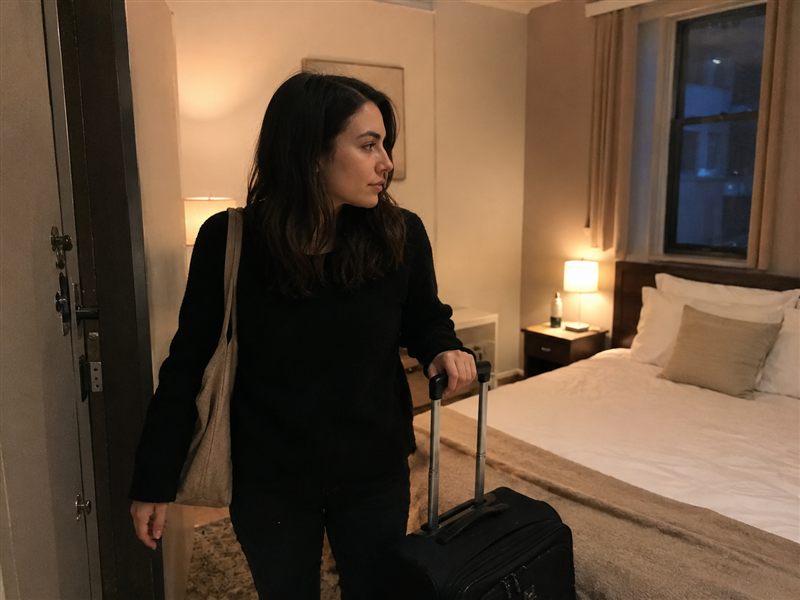
A hotel room, a new flat, halls, a friend's spare room. The first night somewhere unfamiliar is the one you sleep worst in — not because it is dangerous, but because your brain has nothing to compare it to. Ten minutes of deliberate looking fixes that.
Why the first night feels different
In your own home you have a mental map. You know which stair creaks, what the boiler sounds like at 2am, how the light falls through the curtains. Somewhere new, every noise is unclassified — so your brain treats all of it as potentially important and keeps you half awake filing it.
The routine below is not about barricading yourself in. It is about giving your brain the map it is missing, quickly, so it can stand down. Most people find they sleep better the first time they do it.
The ten minutes
1. Work the door (2 minutes)
Lock it, then physically pull the handle to confirm it has actually engaged — a surprising number of doors feel locked and are not. Find out whether there is a second lock, a chain or a latch, and use it. If it is a hotel, check the door closes on its own behind you rather than resting ajar.
If you are staying somewhere with a keypad or a key safe, and you were given the code by message, assume other people have had that code before you. A portable door wedge or a travel door alarm costs a few pounds and solves this permanently.
2. Check what opens (2 minutes)
Open and close each window so you know which ones actually lock and which are painted shut. Pay particular attention to anything on the ground floor, anything reachable from a flat roof, balcony or fire escape, and any window you would want open for air overnight — decide now whether that one is safe to leave ajar, rather than at midnight when you are tired.
3. Find your way out in the dark (2 minutes)
Look for the fire exit route and count the doors between your room and it. In smoke or a power cut you may be navigating by feel, and "third door on the left" is the kind of fact that is useless unless you learned it in advance. Locate the light switches you would need at 3am, and put your phone, keys and shoes somewhere you can find them without looking.
4. Set up your phone (2 minutes)
Plug it in on the side of the bed nearest the door, not across the room. Check it actually charges — unfamiliar sockets and switched wall plugs catch people out constantly. Make sure you know how to trigger your phone's emergency SOS without unlocking it, and if you are somewhere with poor signal, note where in the building it improves.
5. Tell one person (2 minutes)
Send one message to someone you trust: where you are, the address, and roughly when you expect to be in contact next. It takes twenty seconds and it converts "nobody knows where she is" into "somebody would notice". If you are a member, the WhatsApp group exists precisely so this never has to be a big ask of a friend at an awkward hour.
What "good enough" looks like
You are not trying to make the room impregnable. You are trying to reach the point where, if you woke at 3am to an unfamiliar noise, you would have somewhere to put it: that is the lift, that is the pipes, that window is locked, the door is bolted, my phone is here. That is the whole goal.
Done once, this takes ten minutes. Done a few times, it takes three, and it stops feeling like a safety routine and starts feeling like unpacking.
If something genuinely feels wrong
Trust it and act early, while acting is still easy and cheap. Ask to change rooms. Put the chain on and call reception. Book somewhere else and lose the deposit. The cost of being wrong is a bit of money and a slightly awkward conversation, and you will never be asked to justify it to anyone.
And if you are ever in immediate danger, call 999. Everything above is about the ordinary nights — which is almost all of them.
In immediate danger? Call 999. Her Security is an education platform and community — for urgent help we always recommend the police, NHS 111 or a specialist crisis line.
← All stories